



To view this video, please enable marketing cookies from Cookie Preferences in the footer.

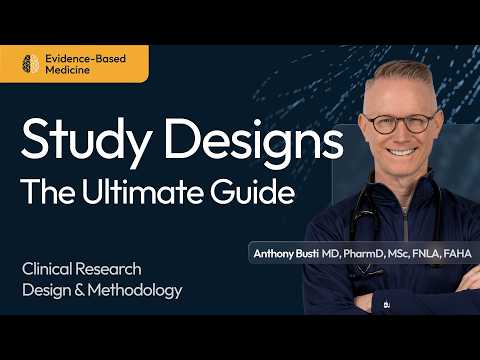
The ultimate guide to types of study designs used in clinical research is explained and made easy for clinicians and researchers. In this lecture on This Is Why, Dr. Busti walks through the major study designs used in medical research and explains how each design affects bias, causality, and the interpretation of clinical evidence. Dr. Busti also addresses the pros and cons of major study designs and when to use a particular study design to answer a particular clinical question.
Understanding study design is essential for interpreting medical literature and assessing the internal and external validity of results, thereby informing the application of the information in clinical practice. Different designs—such as randomized controlled trials, cohort studies, case-control studies, and cross-sectional analyses—each have specific strengths, limitations, and risks of bias that influence how results should be applied in clinical practice.
This lecture explains how study design fits into the broader clinical research process described by the NIH and how clinicians should evaluate studies when reading the medical literature.
As part of the This Is Why (TIW) evidence-based medicine (EBM) series, this lecture focuses on the reasoning behind clinical evidence so clinicians can understand why certain study designs carry more evidentiary weight than others.
Topics Covered:
- Study design in clinical research
- Descriptive vs analytic studies
- Observational vs experimental research
- Case-control studies
- Cohort studies
- Cross-sectional studies
- Randomized controlled trials (RCTs)
- Randomized crossover trials
- Explanatory vs pragmatic clinical trials
- Qualitative vs quantitative research
- Study design hierarchy and risk of bias
- Internal vs external validity
- Confounders and bias in clinical trials
- Clinical trial registration
- CONSORT reporting guidelines
This lecture is part of the This Is Why (TIW) evidence-based medicine (EBM) learning series with Dr. Busti. The series teaches clinicians how clinical studies are designed, how statistical results should be interpreted, and how research findings translate into real patient care decisions.
Table of Contents
00:00 - Introduction
03:41 - Study Concept to Protocol Development
08:57 - Categories of Study Designs
14:41 - Case Reports & Case Series
21:39 - Cohort Studies
28:07 - Case-Control & Cross-Sectional Studies
32:16 - Experimental Studies & RCTs
34:38 - Qualitative vs Quantitative Research
39:27 - Confounding & Limitations
48:29 - Conclusion
If this helped you, please like, subscribe to our YouTube Channel, and share it with a classmate or colleague. That will help this new channel continue producing free, high-yield medical education content.
Don’t forget to turn on notifications on YouTube so you don’t miss upcoming lectures in pharmacology, medical rounds, and more!
#StudyDesign #ClinicalResearch #EvidenceBasedMedicine #Biostatistics #Dr Busti
Speaker:
Anthony Busti, MD, PharmD, MSc, FAHA, FNLA, is a licensed healthcare professional and medical educator with over 30 years of experience in clinical practice and academic teaching. He has trained and practiced as a nurse, pharmacist, and physician, bringing a uniquely comprehensive perspective to patient care and medical education.
Dr. Busti is dedicated to advancing evidence-based medicine and helping clinicians understand the underlying “why” behind clinical decisions to improve patient outcomes.
About This Channel:
This content is created by Anthony Busti, MD, PharmD, MSc, FAHA, FNLA, a board-certified physician with training at Johns Hopkins School of Medicine and University of Oxford and a medical educator for healthcare professionals and students. All material is based on current medical literature and evidence-based guidelines that align with principles of evidence-based medicine (EBM) and Evidence-Based Healthcare (EBHC).
Disclaimer:
This content is for educational purposes only and is not medical advice. It does not replace individualized evaluation, diagnosis, or treatment. Always seek the advice of a qualified health provider with questions about a medical condition and never delay care because of educational content.
More than just access—it’s where understanding deepens.
Create a free account or log in to gain access to this content!


Related Topics