






To view this video, please enable marketing cookies from Cookie Preferences in the footer.

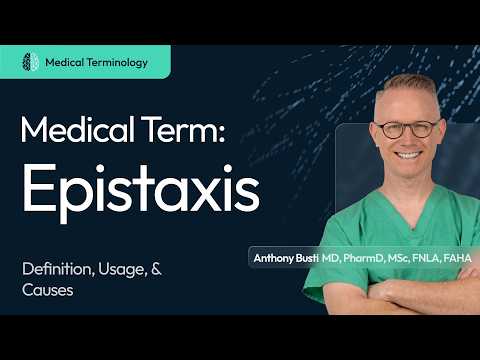
Epistaxis explained by Dr. Busti. In this episode on This Is Why, we break down why epistaxis happens, how clinicians think through causes of bleeding, and why the location of bleeding matters clinically.
Dr. Busti explains anterior vs posterior epistaxis, common risk factors, medication-related bleeding, vascular anatomy, and when recurrent nosebleeds may signal a more serious underlying condition.
This episode connects anatomy, physiology, pathology, and clinical reasoning so healthcare professionals can better understand the “why” behind epistaxis and nosebleed management.
Topics Covered:
- What epistaxis means clinically
- Why nosebleeds happen
- Dryness and nasal mucosal irritation
- Trauma and nose picking
- Inflammation and upper respiratory infections
- Anticoagulants antiplatelets and NSAIDs
- Intranasal steroids and cocaine exposure
- Bleeding disorders and thrombocytopenia
- Hereditary hemorrhagic telangiectasia HHT
- Leukemia liver disease and vasculitis
- Kiesselbach plexus anatomy
- Anterior vs posterior epistaxis
- Why posterior bleeds are more concerning
- Risk factors for recurrent epistaxis
- Initial management principles for nosebleeds
- Why anatomy changes treatment decisions
Get more with a free membership at https://www.thisiswhy.health/
- Access free downloads from our videos
- Access deep dive content from Dr. Busti
- Organize content via playlists & collections
- Join live Q&A
- Receive member newsletters
- Coupons & discounts for exam prep resources
Chapter Table of Contents
00:00 - Introduction
01:11 - Pop Culture vs Clinical Reality
02:55 - Definition of Epistaxis
04:17 - Common Causes of Nosebleeds
07:42 - Medications & Bleeding Risk
09:00 - Systemic Diseases & Structural Causes
11:36 - Nasal Blood Supply & Kiesselbach's Plexus
13:11 - Anterior vs Posterior Epistaxis
15:04 - Treatment & Management of Epistaxis
16:21 - Conclusion
If this helped you, please like, subscribe, and share it with a classmate or colleague. That will help this new channel continue producing free, high-yield medical education content.
Don’t forget to turn on notifications so you don’t miss upcoming lectures in pharmacology, medical rounds, and more!
#Epistaxis #Nosebleed #AnteriorEpistaxis #PosteriorEpistaxis #DrBusti
Speaker:
Anthony Busti, MD, PharmD, MSc, FAHA, FNLA, is a licensed healthcare professional and medical educator with over 30 years of experience in clinical practice and academic teaching. He has trained and practiced as a nurse, pharmacist, and physician, bringing a uniquely comprehensive perspective to patient care and medical education.
Dr. Busti is dedicated to advancing evidence-based medicine and helping clinicians understand the underlying “why” behind clinical decisions to improve patient outcomes.
About This Channel:
This content is created by Anthony Busti, MD, PharmD, MSc, FAHA, FNLA, a board-certified physician with training at Johns Hopkins School of Medicine and University of Oxford and a medical educator for healthcare professionals and students. All material is based on current medical literature and evidence-based guidelines that align with principles of evidence-based medicine (EBM) and Evidence-Based Healthcare (EBHC).
Disclaimer:
This content is for educational purposes only and is not medical advice. It does not replace individualized evaluation, diagnosis, or treatment. Always seek the advice of a qualified health provider with questions about a medical condition and never delay care because of educational content.
More than just access—it’s where understanding deepens.
Create a free account or log in to gain access to this content!
Dive Deeper
Bonus Video (ad free)

To view this video, please enable marketing cookies.

.jpg)
.jpg)
.jpg)


